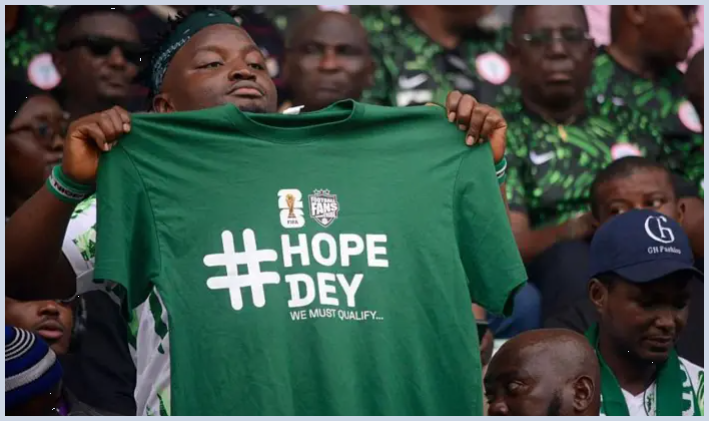
Nigerian football fans remain caught between optimism and uncertainty as they await a crucial decision from FIFA over allegations that DR Congo used ineligible players during the African qualifiers for the 2026 FIFA World Cup.
The controversy stems from November’s dramatic play-off clash, where DR Congo defeated the Super Eagles on penalties to advance to an intercontinental qualifier for the tournament set to be hosted in Canada, Mexico, and the United States. Shortly after the defeat, the Nigeria Football Federation (NFF) formally lodged a complaint with FIFA, questioning the eligibility of several Congolese players.
Central to the protest are players such as Aaron Wan-Bissaka and Axel Tuanzebe, both former England youth internationals who later switched allegiance. Nigerian officials argue that Congolese nationality laws prohibit dual citizenship, claiming this could make the players ineligible under domestic regulations despite FIFA approval.
While some supporters believe the appeal could offer Nigeria an unexpected path back into World Cup contention, others have raised concerns about the fairness of progressing through administrative decisions rather than results achieved on the pitch.
FIFA has confirmed that the matter remains under review but has yet to provide a timeline for its ruling. The NFF has also dismissed rumours suggesting the complaint had already been rejected. According to the federation’s communications director, Demola Olajire, no official verdict has been communicated to either federation.
NFF general secretary Mohammed Sanusi previously maintained that FIFA may have been misled during the eligibility clearance process, insisting that the presence of dual passports among certain players contradicts Congolese legal provisions. The players in question later represented DR Congo at the 2025 Africa Cup of Nations in Morocco, further intensifying debate around the issue.
Meanwhile, the Congolese Football Federation has strongly denied any wrongdoing, describing Nigeria’s petition as an attempt to overturn a sporting result through administrative means. DR Congo are scheduled to face either New Caledonia or Jamaica in March’s intercontinental play-off, with a World Cup group-stage spot awaiting the winner.
The dispute highlights a recurring challenge in international football, the gap between FIFA’s eligibility framework and individual national citizenship laws. FIFA regulations allow players to switch national teams under specific conditions, provided they hold a valid passport and receive approval from the governing body’s players’ status committee. Importantly, FIFA rules do not necessarily prohibit dual nationality, creating legal grey areas when domestic laws differ.
Nigeria’s case reportedly argues that incomplete or inaccurate documentation may have influenced FIFA’s approval process. If proven, the ruling could trigger wider scrutiny of player eligibility procedures across African football.
Several outcomes remain possible. FIFA could dismiss the complaint entirely, allowing DR Congo’s qualification journey to continue unchanged. Alternatively, the governing body may impose administrative sanctions without altering match results. In more severe scenarios, sporting penalties, such as forfeits or match reversals, could be considered if clear violations are established.
For Nigeria, the implications are enormous. Despite finishing third at the 2025 Africa Cup of Nations and showing signs of resurgence, the Super Eagles currently face missing a second consecutive World Cup. For DR Congo, the stakes are equally high as they seek a historic return to football’s biggest tournament for the first time since 1974.
As the football world waits for FIFA’s decision, the case continues to spark debate across the continent, raising difficult questions about fairness, governance, and whether administrative rulings should reshape outcomes decided on the field.