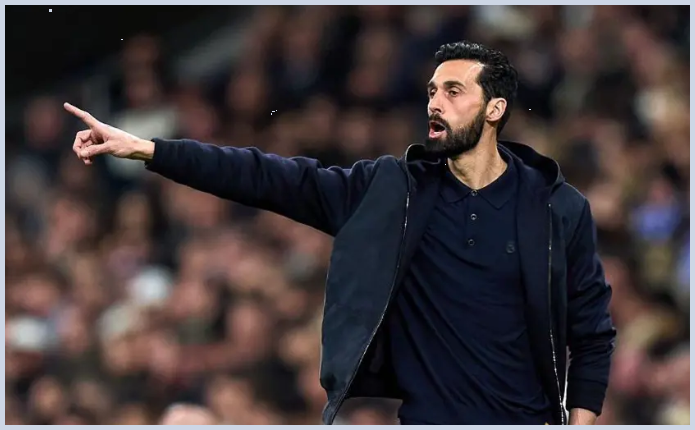
Only five weeks into his managerial tenure, Álvaro Arbeloa already finds himself facing a potentially season-defining moment as Real Madrid prepare for a high-stakes Champions League showdown against Benfica.
The 43-year-old stepped into the role last month following the departure of Xabi Alonso, accepting one of football’s most demanding jobs despite having no prior experience at elite senior level. While the appointment carried clear risks, recent results have eased early doubts, at least temporarily.
Yet European competition presents a different level of scrutiny, and failure on this stage could quickly reignite questions surrounding the club’s bold decision.
Momentum Built, But Pressure Remains
After an uncertain start and mixed reactions from supporters, Real Madrid have steadied under Arbeloa, winning six of their last seven matches and climbing to the top of La Liga. The improved run has restored calm within the club hierarchy, easing early concerns about the new coach’s readiness.
However, their only defeat during that stretch came against Benfica, who secured a thrilling 4–2 victory earlier in the campaign. That result forced Madrid into a difficult play-off scenario against the same opponent in a competition they have dominated for more than a decade.
For a club accustomed to deep Champions League runs, failing to reach the last 16, something that has not happened in over thirty years, would be almost unimaginable for supporters.
Tactical Tweaks Bring Stability
Since that setback in Lisbon, Arbeloa has reshaped his tactical approach. The manager abandoned a traditional 4-3-3 setup, previously led by an attacking trio including Kylian Mbappé and Vinícius Júnior, opting instead for a more balanced 4-4-2 formation.
The adjustment has added defensive compactness while maintaining attacking flexibility. By strengthening midfield presence, Real have found improved control in central areas and greater efficiency during counter-attacks.
Arbeloa has emphasized that structure and teamwork, rather than formation alone, have driven the team’s recent progress. According to him, concentration, pressing intensity, and collective effort are now central pillars of Madrid’s identity.
Midfielders such as Federico Valverde, Eduardo Camavinga, Aurélien Tchouaméni, and Arda Güler have played key roles in executing this more disciplined approach.
Defensive Reinforcements Provide Boost
Another positive development for Real Madrid has been the return of key defenders from injury. Former Liverpool full-back Trent Alexander-Arnold and German centre-back Antonio Rüdiger are both available again, strengthening a backline that had looked vulnerable earlier in the season.
Arbeloa praised Alexander-Arnold’s tactical awareness following a recent league victory, highlighting his understanding of space and decision-making as valuable assets for the team’s evolving system.
Despite the reinforcements, Madrid still faces significant absences. Jude Bellingham remains sidelined with a hamstring injury, while Éder Militão is out for the season. Suspensions will also deprive the squad of additional attacking options for this crucial encounter.
A Hostile European Atmosphere Awaits
Arbeloa is fully aware of the challenge awaiting his side at Benfica’s Estádio da Luz, a venue renowned for its intense atmosphere and relentless crowd energy. He has stressed that victory will require a complete performance, balancing defensive discipline with attacking precision while maintaining focus throughout the full 90 minutes.
While acknowledging Madrid’s superior individual quality on paper, Arbeloa warned that belief, organization, and leadership often prove decisive in European knockout football.
Across the touchline stands José Mourinho, whose tactical authority and competitive mentality continue to shape Benfica’s identity, making the tie as much a strategic contest as a technical one.
A Moment That Could Define a Tenure
The Champions League has long been synonymous with Real Madrid’s identity, and expectations remain uncompromising. For Arbeloa, this clash represents more than just progression to the next round; it is an early test of credibility, authority, and long-term vision.
A strong result could solidify belief in his leadership and validate the club’s gamble. A setback, however, may quickly reopen debates about experience and direction.
As Madrid step onto the European stage once again, the question is simple but significant: can Arbeloa protect the club’s legacy or will this tie become the first true crisis of his reign?