Spain's march at the 2026 FIFA World Cup has been built on far more than tactical brilliance. Under Luis de la Fuente, La Roja have developed a winning mentality, a united dressing room, and a clear football identity that has made them one of the tournament's strongest contenders.
After lifting the UEFA European Championship two years ago, Spain is now chasing an extraordinary double by adding the World Cup to their trophy cabinet. If they achieve that feat, they will become only the fourth nation to simultaneously hold both major international titles, joining Spain's 2010 side, France in 2000 and West Germany in 1974.
With a quarter-final clash against Belgium standing between Spain and another step towards glory, De la Fuente's team continues to impress through both consistency and character.
A Manager Who Blends Tactics with Team Spirit
Since taking charge in January 2023, De la Fuente has transformed Spain into one of international football's most reliable teams. The 65-year-old has suffered only three defeats and has guided La Roja through an impressive unbeaten run stretching to 35 matches.
His coaching success is not based solely on possession football or tactical flexibility. Instead, it stems from years spent within the Spanish Football Federation, where he coached several youth teams before becoming senior manager.
That long-term involvement has allowed him to build strong relationships with many of the current players while preserving Spain's famous football philosophy. Rather than reinventing the national team, De la Fuente has refined an already successful system by adding greater tactical balance, defensive organisation and attacking variety.
Culture Comes Before Individual Talent
One of De la Fuente's strongest beliefs is that successful football teams are built around selfless individuals.
He consistently stresses that talent alone is never enough. According to the Spain boss, players must also be disciplined, generous, hardworking and fully committed to the collective goal.
Drawing on decades of dressing-room experience, he believes every squad contains personalities capable of disrupting harmony, and avoiding that type of influence has become central to his management style.
This emphasis on unity perfectly complements Spain's traditional approach to football. Their possession-based game demands intelligent movement, trust between teammates and a willingness to work for one another.
That collective identity has become one of the team's greatest strengths throughout the tournament.
Spain's Identity Makes Them Difficult to Beat
Unlike many national teams that regularly change style after appointing new managers, Spain have maintained a clear footballing philosophy for decades.
Every player entering the senior squad already understands the tactical principles expected of them because they have progressed through the same developmental pathway.
De la Fuente has built upon those foundations rather than replacing them. Spain remains committed to controlling possession, but they are now more adaptable during transitions and far more dangerous in attacking areas.
Opponents know exactly how Spain intend to play, yet stopping them remains another challenge altogether.
The coaching staff carefully analyse every opponent before making tactical adjustments. Whether improving passing accuracy, managing emotionally charged contests or adapting to different styles of play, De la Fuente places enormous value on preparation.
His own experience has also shaped his leadership. Earlier in his coaching career, emotional reactions sometimes proved costly. Today, he insists Spain must remain calm under pressure because abandoning their identity often leads to mistakes.
Lamine Yamal's Growth Is Being Carefully Managed
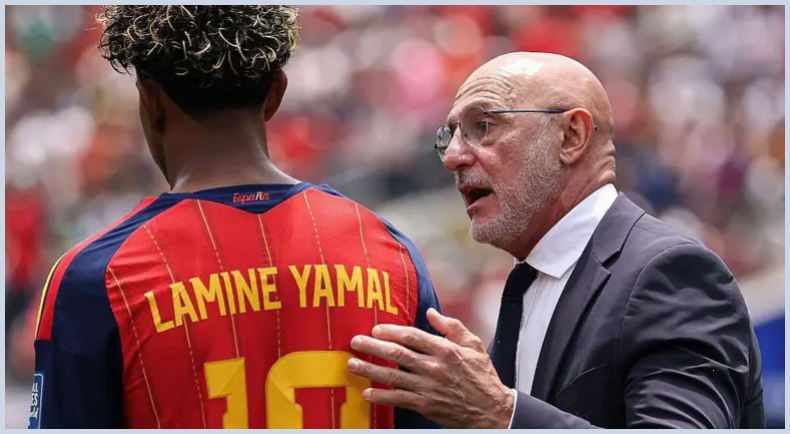
One of De la Fuente's biggest responsibilities has been guiding teenage sensation Lamine Yamal through the biggest tournament of his young career.
After returning from an injury shortly before the World Cup, Yamal arrived in camp without full match fitness. Rather than rushing him, the Spain manager carefully planned his workload with the knockout stages in mind.
Now, De la Fuente believes the winger is ready to become one of the tournament's decisive figures.
For the coach, however, Yamal's development extends beyond goals and assists. He was particularly pleased with the youngster's work rate during Spain's victory over Portugal, praising his commitment without the ball as much as his attacking quality.
De la Fuente believes true greatness comes from understanding every aspect of the game, not simply producing moments of brilliance.
Consistency Continues to Drive Spain Forward
The same discipline De la Fuente expects from his players also defines his personal life.
He continues to train daily, maintaining the habits that have shaped his coaching career for decades. Friends have often described him as relentless, but he embraces that reputation, believing consistency is the foundation of lasting success.
That mindset now runs throughout the Spain squad.
With experienced leaders, exciting young talents like Lamine Yamal, and a manager who values teamwork as highly as technical ability, Spain have emerged as one of the favourites to win the 2026 FIFA World Cup.
As the knockout rounds intensify, De la Fuente's greatest achievement may not simply be building an outstanding team, but creating a culture capable of delivering sustained success on football's biggest stage.