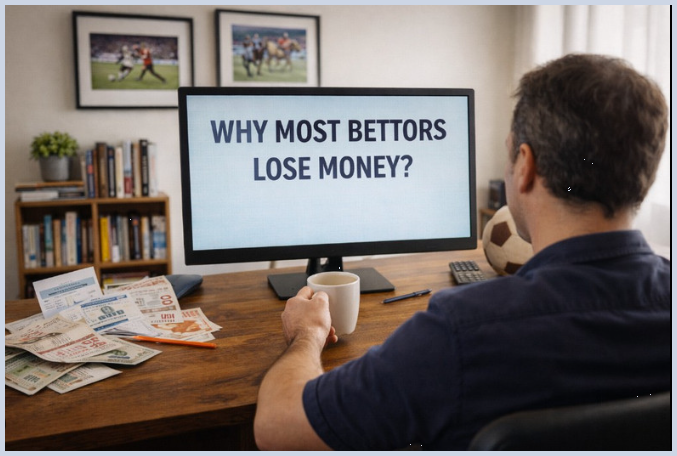
I’ve fallen into this trap more times than I’d like to admit. You watch a team lose three games in a row and think, “Surely, they can’t lose again. A win is due.” That single thought has drained more betting accounts than bad luck ever could.
That mindset is exactly what the gambler’s fallacy in football betting is all about and if you don’t recognize it, it can quietly wreck your strategy.
What Is the Gambler’s Fallacy?
At its core, the gambler’s fallacy in football betting is the belief that past outcomes influence future results in situations that are actually independent. In simple terms, just because something has happened repeatedly doesn’t mean the opposite is about to happen.
In football betting, it shows up like this:
- A striker hasn’t scored in five matches “He’s definitely scoring today.”
- A team is on a losing streak “They’re due a win.”
- A match has had several overs “This one has to be under.”
But football doesn’t work that way. Each match is influenced by form, tactics, injuries, and countless variables, not some invisible balancing force.
My Personal Wake-Up Call
I remember betting on a mid-table team in the English league. They had lost four consecutive matches, and I convinced myself they were “due.” I ignored their poor defense, key injuries, and tough opponent. I placed a confident bet.
They lost again. Comfortably.
That was the moment I realized I wasn’t analyzing, I was hoping. And hope is not a strategy in football betting tips or any form of sports betting strategy.
Why This Thinking Trap Is So Dangerous
The problem with the gambler’s fallacy in football betting is that it feels logical. Our brains are wired to look for patterns, even when none exist. That’s why it’s so easy to believe a losing streak must end now.
Here’s what makes it risky:
- It ignores real data: Form, injuries, head-to-head stats, all get pushed aside.
- It encourages emotional betting: You bet based on feelings, not analysis.
- It leads to chasing losses: After losing, you double down thinking a win is inevitable.
This is where many bettors spiral. One irrational decision leads to another.
Common Thinking Traps You Must Avoid
Let’s break down a few variations of this fallacy that show up often:
1. “A Win Is Due”
This is the classic. A team hasn’t won in a while, so you assume they will now. But what if they’re simply not good enough?
2. “They Can’t Keep Winning Forever”
Ever bet against a team on a hot streak just because it feels like they should lose? That’s the same trap in reverse.
3. “Goals Are Overdue”
After several low-scoring games, you jump on over 2.5 goals thinking a high-scoring match must come next.
These assumptions ignore the reality that each match is a new event, not a continuation of a pattern that must balance out.
How to Avoid the Gambler’s Fallacy
Escaping the gambler’s fallacy in football betting isn’t about luck, it’s about discipline. Here’s what has helped me stay grounded:
Focus on Data, Not Streaks
Instead of looking at whether a team has been losing, ask why. Are they missing key players? Facing stronger opponents? Struggling tactically?
Use Proper Bankroll Management
One of the biggest mistakes tied to this fallacy is chasing losses. Stick to a consistent staking plan. This is essential in bankroll management in betting.
Separate Emotion from Analysis
If your reason for placing a bet starts with “I feel like…”, pause. That’s usually a red flag.
Think Probability, Not Certainty
No outcome is “due.” Every bet should be based on probability, not belief.
Bottom Line
If there’s one lesson I wish I had learned earlier, it’s this: the gambler’s fallacy in football betting is subtle but costly. It doesn’t scream at you, it whispers, convincing you that your logic makes sense when it really doesn’t.
The next time you catch yourself thinking, “A win is due,” stop and question it. Look at the data. Reassess the situation. Because in betting, the difference between profit and loss often comes down to one thing, clear thinking.
And trust me, once you eliminate this fallacy from your mindset, you’ll already be ahead of most bettors out there.