The remarkable rise of Farnham Town has become one of the most inspiring stories in English football. Once an overlooked non-league club, the Surrey-based side is now just two promotions away from the English Football League (EFL) after an astonishing run of success.
Under the leadership of ambitious chairman Harry Hugo, Farnham have transformed both on and off the pitch, drawing comparisons with Wrexham, whose fairytale journey captivated football fans worldwide.
While reaching the EFL remains a huge challenge, Farnham's rapid progress suggests the dream is becoming increasingly realistic.
A Young Entrepreneur Searching for Purpose
Before becoming a football club owner, Harry Hugo had already achieved financial success. After co-founding influencer marketing agency Goat, Hugo sold 40 percent of the business in 2021, securing financial freedom before turning 30.
Although the achievement allowed him to step away from work if he wanted, Hugo soon realized that wealth alone wasn't enough. He found himself chasing short-term excitement but wanted something with greater meaning.
One conversation with friends would unexpectedly change the course of his life. While visiting a Ferrari dealership, Hugo considered buying a Ferrari 458 Spyder simply because it looked enjoyable.
A friend challenged that idea. Rather than spending the money on a luxury car, why not buy a football club? The suggestion quickly evolved from a joke into a serious project.
Choosing the Right Club
Hugo and his business partners created a ranking system to evaluate non-league clubs located within roughly 50 miles of his home. Initially, Leatherhead FC emerged as their preferred option.
He spent six months attending matches and learning about the club before opening discussions with its board. Despite his enthusiasm, the proposed takeover never materialized.
Looking back, Hugo believes the experience helped him discover that it wasn't Leatherhead itself he had fallen in love with, it was non-league football. The atmosphere, community spirit, and emotional connection convinced him to continue searching. That search led him to Farnham Town.
Why Farnham Town Felt Like Home
Farnham wasn't just another football club. Hugo had grown up nearby and attended school in the town, giving the opportunity a personal connection.
Although the club competed two divisions lower than Leatherhead, the board immediately welcomed his vision. Unlike the previous negotiations, a takeover agreement was completed within just five weeks.
However, the scale of the challenge soon became clear. According to Hugo, the facilities were in poor condition. The Memorial Ground offered little beyond a basic clubhouse, a single stand, and minimal infrastructure. He has openly admitted he was embarrassed to invite family members to visit the stadium during those early days.
Transforming the Club on and Off the Pitch
Fast forward a few years, and the transformation has been extraordinary. The stadium has undergone significant improvements, while the football team has enjoyed unprecedented success under manager Paul Johnson.
The club's progress has been nothing short of remarkable:
- 2022/23: Finished sixth in the Combined Counties Premier Division South.
- 2023/24: Won the league with an outstanding 108 points.
- 2024/25: Claimed the Isthmian South Central Division title with 102 points.
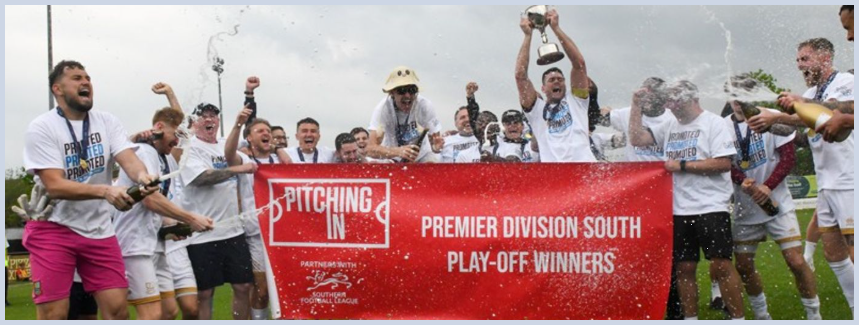
- 2025/26: Finished second in the Southern League Premier Division South before defeating Gloucester City 5-1 in the play-off final to secure promotion.
As a result, Farnham will compete in the National League South during the 2026/27 season. Before Hugo's arrival, the club had never played above the ninth tier of English football. Now they are preparing for life in the sixth tier.
Following the Wrexham Blueprint
Unsurprisingly, many supporters have compared Farnham's journey to that of Wrexham. The Welsh club's rise from the National League to the Championship under Hollywood owners Ryan Reynolds and Rob McElhenney has inspired countless lower-league clubs. Hugo welcomes the comparisons.
He believes Wrexham proved that clubs can succeed by investing not only in football but also in branding, fan experience, and media engagement. Their success encouraged many clubs to think bigger. Farnham hope to achieve something similar.
Building a Brand Beyond Football
Unlike many clubs at their level, Farnham have embraced digital media as a major part of their growth strategy. The club produces a weekly YouTube documentary series called Non-League Diaries, giving supporters behind-the-scenes access throughout the season.
Hugo also leveraged his business connections to attract high-profile partnerships. During his first season, internet sensation The Sidemen became club sponsors, significantly increasing Farnham's visibility.
The club later enjoyed another viral moment when former Liverpool and England striker Peter Crouch appeared as the team's mascot after losing a Fantasy Football League challenge.
Former Love Island runner-up Harry Cooksley also became a key member of the squad before leaving earlier this summer.
Those initiatives have helped Farnham build an impressive online audience. Today, the club boasts more than 150,000 followers on TikTok, giving them one of the strongest social media profiles in non-league football.
For Hugo, digital engagement is far more than entertainment. It strengthens the club's commercial appeal, attracts sponsors, and introduces Farnham Town to supporters far beyond Surrey.
The EFL Dream Is Growing Stronger
Just a few years ago, reaching the English Football League seemed almost impossible. Now, the goal feels increasingly attainable. Farnham sit only two promotions away from League Two, a remarkable position considering where they started. Hugo believes Surrey deserves representation in the EFL.
Despite being one of England's wealthiest counties and located close to London, Surrey currently has no club among the Football League's 92 teams. That reality continues to fuel Farnham's ambition. He points to clubs like Woking and Sutton United as examples. When his ownership began, Sutton were competing in the EFL while Farnham were several divisions below. Today, only one league separates Farnham from Woking, highlighting how quickly the gap has narrowed.
Promotion Remains the Ultimate Goal
Despite the rapid rise, Hugo understands the challenges become greater with every promotion. He acknowledges that success requires far more than what supporters see on matchdays. Recruitment, infrastructure, finances, and long-term planning all play equally important roles.
Naturally, Farnham will aim for another promotion this season. However, Hugo insists missing out would not be considered a failure. Unlike previous campaigns, another year in the National League South could provide valuable time to continue upgrading the club's facilities to meet National League and eventual EFL standards.
Having celebrated four pitch invasions in four years, he jokes that supporters might not need another one immediately.
A Modern Model for Non-League Success
Farnham Town's story is about far more than consecutive promotions. It demonstrates how ambitious leadership, innovative marketing, community engagement, and smart investment can completely reshape a football club.
By combining success on the pitch with a modern digital strategy, the club has challenged traditional ideas about what a non-league football club can become. Several years after walking into a Ferrari showroom searching for excitement, Harry Hugo discovered something far more rewarding.
Instead of buying a sports car, he found a purpose, building Farnham Town into one of the most exciting success stories in English football. While the journey to the EFL remains difficult, few would now dismiss the possibility. If recent history is any indication, counting out Farnham Town would be a mistake.